In Part 1, we explored the signature menu and limited-edition ramen at Ramen Daikinboshi. In Part 2, we dig into the life of Yamamoto himself — from studying mechanical engineering to working at an Italian restaurant and then a factory, before finding his way to ramen. Diagnosed with an incurable disease at 23, and facing a property deal collapse during COVID, this is the story of a man who always knew he'd open a shop in Chichibu.
01 From engineering to Italian food to ramen
 Asami
AsamiWe've been hearing a lot about your training and your approach to ramen. Now I'd like to ask about your life story up to this point -- the path that brought you here.
 Yamamoto
Sure.
AsamiYou're originally from the former Otaki Village in Chichibu. Did you go to high school around here?
YamamotoI went to Chichibu Noko (Chichibu Agriculture & Engineering High School).
AsamiOh, Chichibu Noko. That's the school with all the specialized departments -- food science, forestry, and so on, right?
YamamotoThat's right. Though I was in the mechanical engineering department.
AsamiMechanical engineering! (laughs)
YamamotoAfter graduating from mechanical engineering, I went to culinary school.
AsamiWow. Why that path? Mechanical engineering to culinary school -- how did that happen?
YamamotoI just really loved eating.
AsamiWere you on the heavier side?
YamamotoYeah, I was (laughs).
AsamiI love the reasoning (laughs).
YamamotoWhen I was entering high school, I actually considered the food science department, but I ended up going with the easier one to get into. Still, I thought, I should pursue what I really want to do. So I went to culinary school, got my cooking license in a year, and my first job was at an Italian restaurant.
AsamiWhich restaurant was it?
YamamotoA place called Mizzet in Urawa.
AsamiHuh. But you left after six months, right?
YamamotoI did.
AsamiFirst of all, why Italian?
YamamotoBecause I loved pasta.
AsamiYour reasons are wonderfully simple (laughs). You love eating, you love pasta, and you just built a career on that.
YamamotoI think doing what you love is a good thing.
AsamiSo how was the Italian restaurant?
YamamotoI lost about 20 kilograms in six months.
AsamiThat's intense.
YamamotoIt was rough. Monday was our day off, but if there was a holiday, we'd end up working two straight weeks without a break. I'd be at the restaurant from 6 or 7 in the morning until late at night.
AsamiNo wonder you lost weight... Did you decide to quit because it was just too much?
YamamotoThat was part of it. But there was also a senior coworker, one year older than me, who told me, "Yamamoto, you should really quit." That had a big impact.
AsamiWas that senior also working through the same grueling schedule?
YamamotoYeah. He was there every single day. But one day out of the blue he said, "I'm quitting first, but Yamamoto, you should quit too." So I went back to Chichibu.
AsamiAfter coming back to Chichibu, what did you do?
YamamotoI got a factory job.
AsamiSo that's where the mechanical engineering background came in handy. What a plot twist.
YamamotoRight. It was a factory that made molds for car parts.
AsamiI see. How long were you there?
YamamotoFrom about age 20 to 25. But during that time, I started thinking, I don't want to spend my life in a factory.
YamamotoI had my cooking license, and I figured I could make a go of it in the food business in Chichibu. But after the tough experience at the Italian restaurant, I'd become a bit turned off by the food industry altogether.
AsamiI can understand that. If you lose 20 kilos from overwork, anyone would feel that way.
YamamotoAt that point, I was even thinking, I'm done with pasta too (laughs).
 Asami
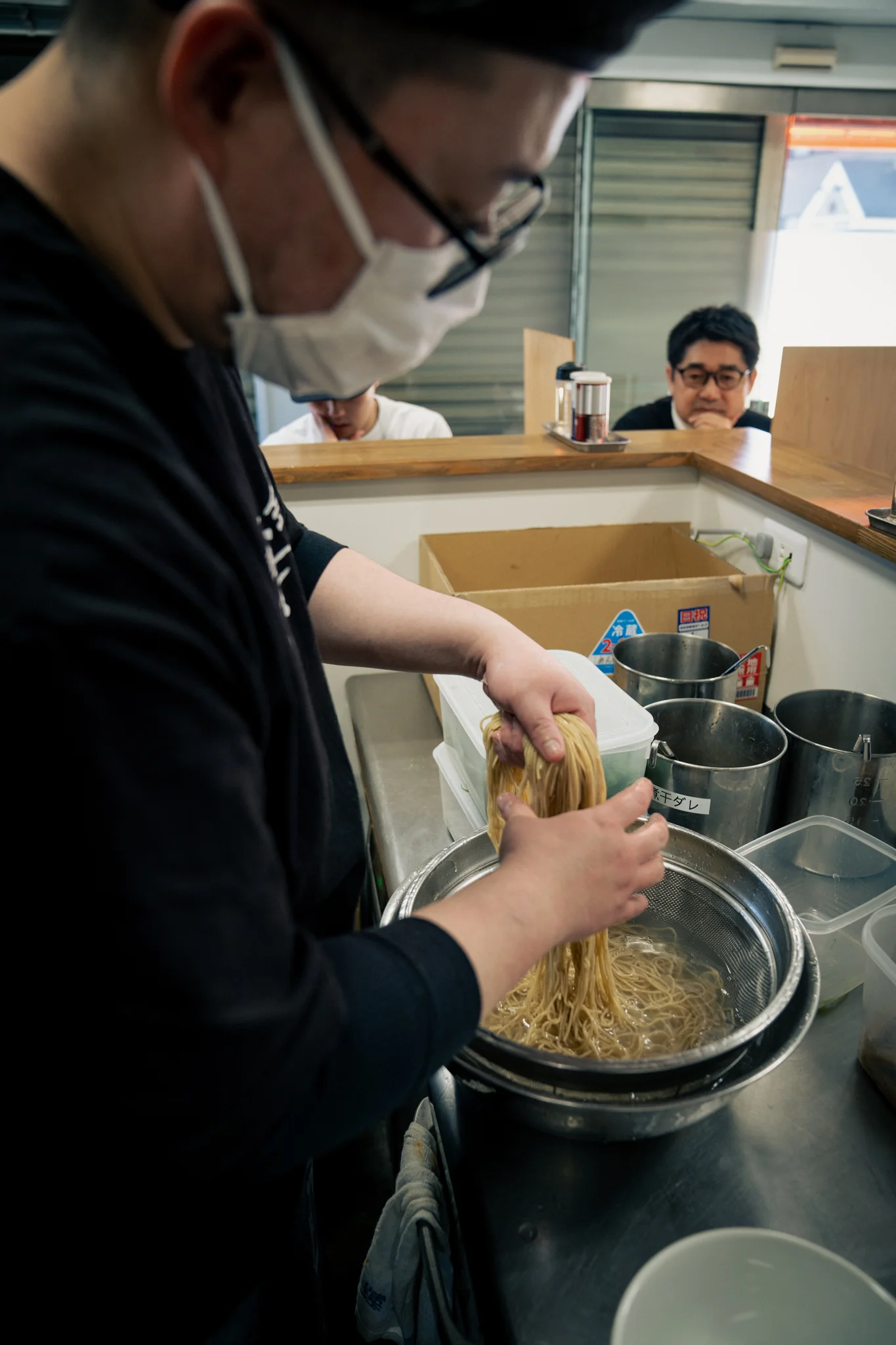
AsamiAnd from there you went to ramen. Why ramen?
YamamotoBecause I thought it would be the most practical thing to do in Chichibu. I didn't have my heart set on any one type of food. I even considered offal cuisine. But when I weighed all the options, ramen seemed like the best fit for me.
AsamiSo even at that point, you already had a sense that you wanted to make a living in food, in Chichibu.
YamamotoAbsolutely. Even when I left for training, I always planned to come back and do it in Chichibu. That was there from the very beginning.
02 What training taught him — and what it exposed
AsamiWhere did you do your first ramen training?
YamamotoAt Joshouken in Honjo. At the time, the guy who now runs Golden Tiger was the manager there.
AsamiAh, Golden Tiger in Kumagaya. The famous shop known for their TKM, right?
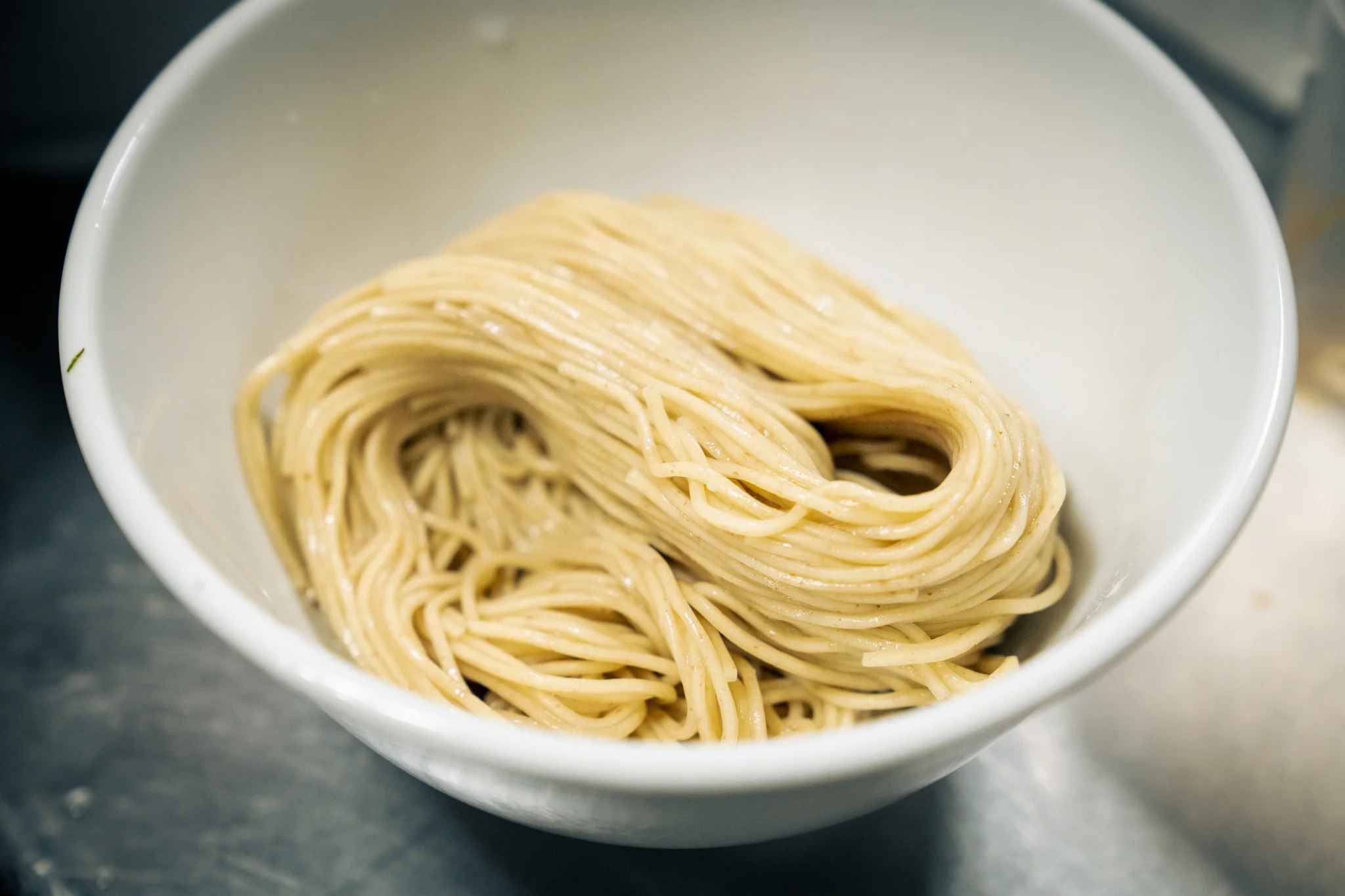
YamamotoThat's right. I'd been going there as a customer before I even decided to become a ramen chef. The owner was really easy to talk to, and I loved the tsukemen there. So I asked to join, and once I started, I realized that ramen was the right career for me. It didn't feel like a burden.
AsamiWhat did you find interesting about it?
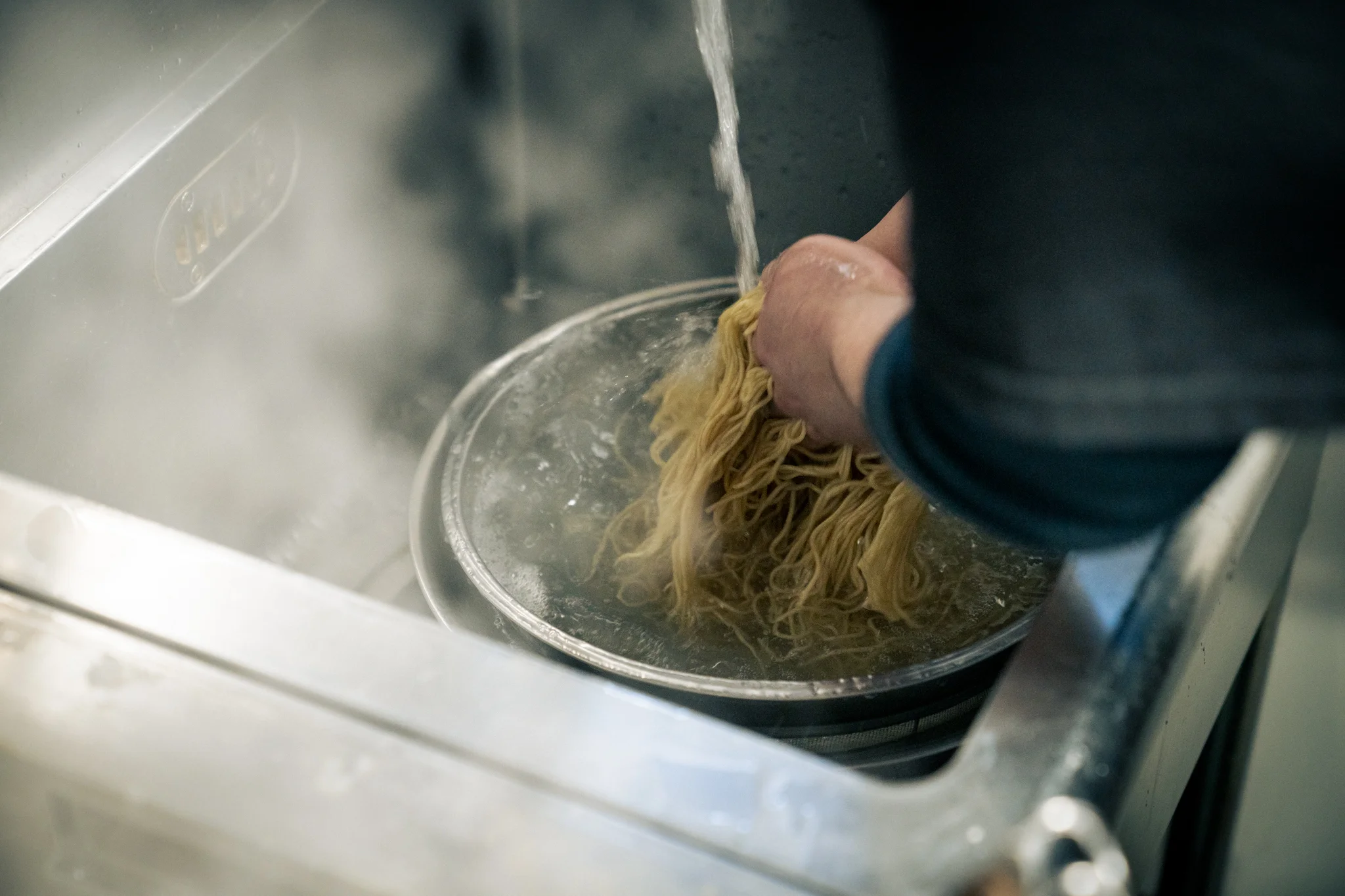
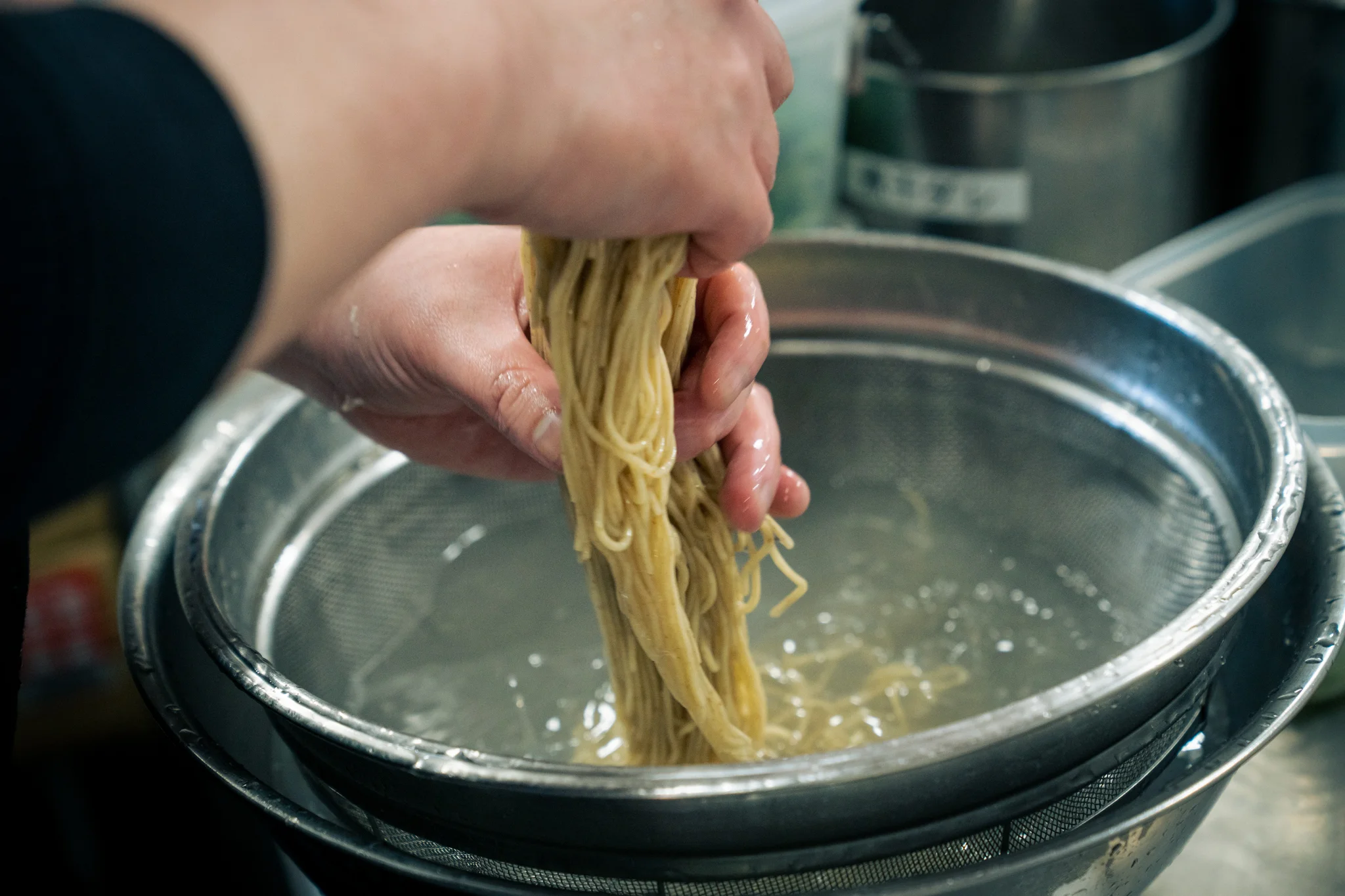
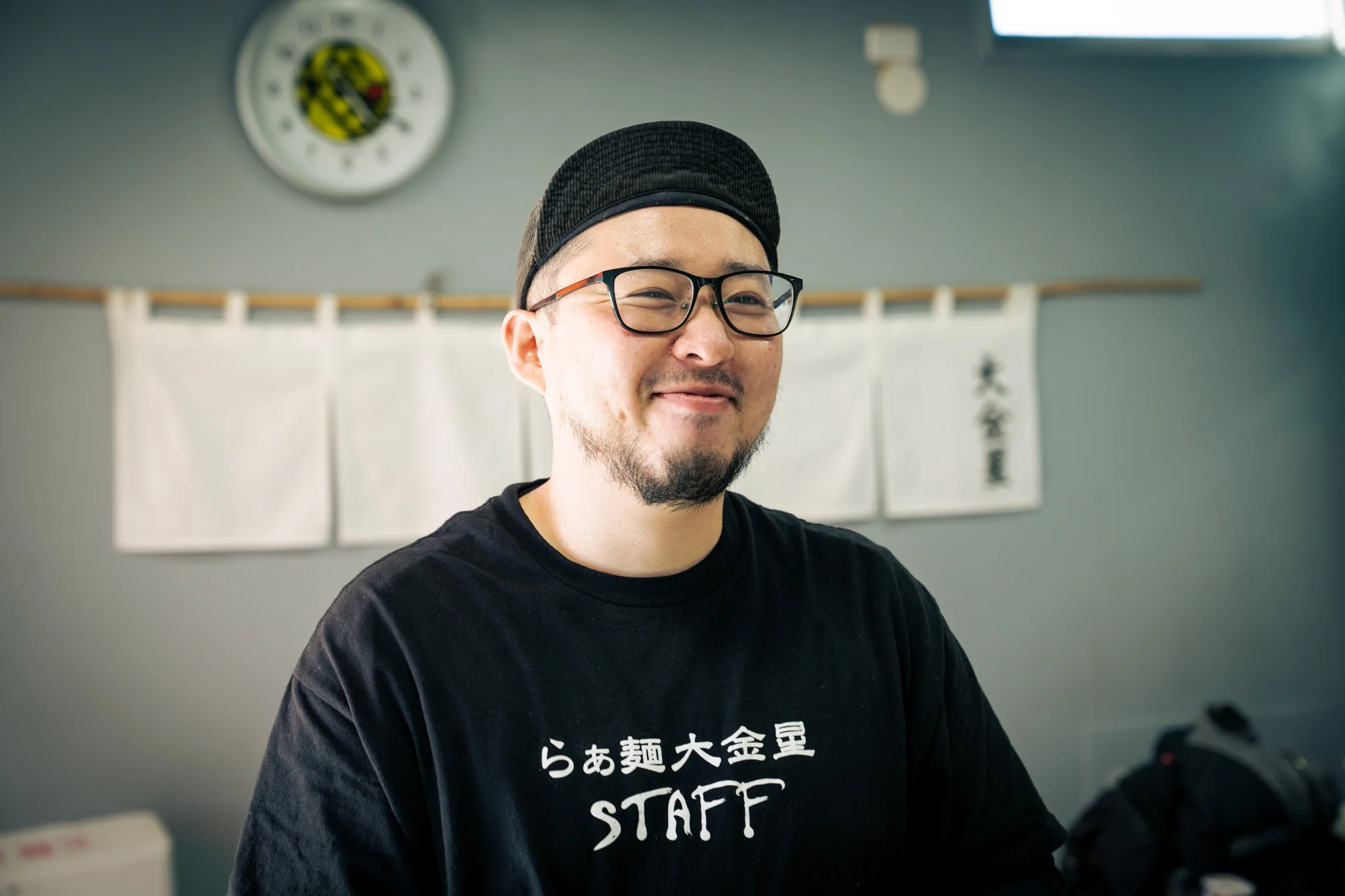
YamamotoMaking soup. The flavor completely changes depending on how you make the soup. That's what fascinated me.
Stop making excuses — Words spoken to Yoshitaka Yamamoto during training YamamotoAlso, Kanazawa-san (the manager at the time, now owner of Golden Tiger) really set me straight. I was there for two and a half years, and I think he fixed a lot of what was rotten in me.
Asami"Rotten"?
YamamotoLess aggressive, more like... I was always making excuses.
YamamotoI got scolded a lot. He'd pull me aside and chew me out every time. "Stop making excuses." Whenever a senior told me something, I'd immediately say "but" or "why" -- I couldn't help it. But I needed someone to tell me. I wouldn't have realized it on my own.
AsamiDo you feel like you were able to overcome that?
YamamotoI do. When he stopped saying it, I thought to myself, "Huh, maybe I've changed."
AsamiWhat happened after that?
YamamotoAfter Joshouken, I went to an affiliate shop in Gunma. They asked me to try running a small shop on my own.
YamamotoIt was a tiny place, about 6 to 8 counter seats, and I ran it almost by myself. It was good experience, but I got stressed out again. The reason was the fear of not hitting sales targets.
AsamiBut you were an employee, right? Even as an employee, you were that invested in the numbers?
YamamotoI was. I knew I wanted to open my own place someday, so I was always crunching the numbers. I was in Isesaki, making about 30,000 yen a day in sales. I kept thinking, "If this is what it's like in Isesaki, what would it be like back in Chichibu?"
03 Diagnosed at 23. He still chose Chichibu
YamamotoActually, I was diagnosed with an incurable disease at 23. It's called ulcerative colitis.
AsamiA disease where ulcers form in the colon, right?
YamamotoThat's right. The doctor at the hospital in Chichibu told me, "This doesn't go away." With medication, you can often live normally, but the symptoms come and go unpredictably. I believe it flares up when I'm under heavy stress.
AsamiWhat kind of symptoms?
YamamotoBloody stool and intense abdominal pain. It feels like someone is squeezing your organs. In severe cases, people need a colostomy bag, but I haven't gotten to that point.
YamamotoLately, it hasn't completely disappeared, but the symptoms are mostly gone. Now I just try to keep things as stress-free as possible.
AsamiThat must have been really tough.
YamamotoWhen I left the shop in Isesaki, the symptoms flared up again. I needed to see specialists at a university hospital in the Tokorozawa area, so I looked for my next job somewhere closer. That's when I started working at Yoshikawa in Kawagoe.
AsamiHow were those two years of training?
YamamotoIt was probably the most intense period of all. If I hadn't met Kanazawa-san, I wouldn't have a ramen career at all. But after him, the next biggest influence was Yoshikawa.
YamamotoUp until then, I'd mostly been making tsukemen and rich, heavy soup ramen. But Yoshikawa was all about clear chicken chintan broth and fish-focused ramen -- completely different from anything I'd done before.
I got to fillet a lot of fish there too. They had a seafood rice bowl on the menu, so the first thing I'd do every morning was break down a whole fish. A ramen shop where you start the day filleting fish -- that was something else.
AsamiSo would you say the limited-edition style came from Joshouken, and the regular menu foundation came from Yoshikawa?
YamamotoExactly. The limited-edition specials lean more toward the Joshouken style, and the regular menu is built on the Yoshikawa foundation.
AsamiAnd from there, you finally made your way back to Chichibu.
YamamotoEven back in high school, my part-time job was at a ramen shop, so in the end, it's always been ramen for me.
AsamiWhat made you finally come back?
YamamotoI heard that the ramen shop where I worked part-time in high school was closing, and they asked if I wanted to take it over. So I called my boss and said, "I'm sorry, but I have a chance to open a shop in Chichibu. I need to leave."
04 The property fell through, then COVID hit — he opened anyway
YamamotoBut that deal fell through. The old couple living upstairs didn't want the noise. They said "We don't want it to be noisy," and the property was off the table.
AsamiOh no... So you quit your job and came back, only to find out the whole thing had fallen apart.
YamamotoThat's right. And then, two or three months later, COVID hit.
YamamotoI came back around the end of 2019, planning to start looking for a property in the new year. But then the pandemic happened. I started wondering, "Can I really do this?"
But during that time, I went to the Chamber of Commerce, talked to mentors, and prepared my financing. I was searching for properties the whole time.
YamamotoI wasn't dead set on this exact location from the start. I was looking at other places too, but nothing came up. Eventually, this was the one.
AsamiThis place used to be a hair salon, right?
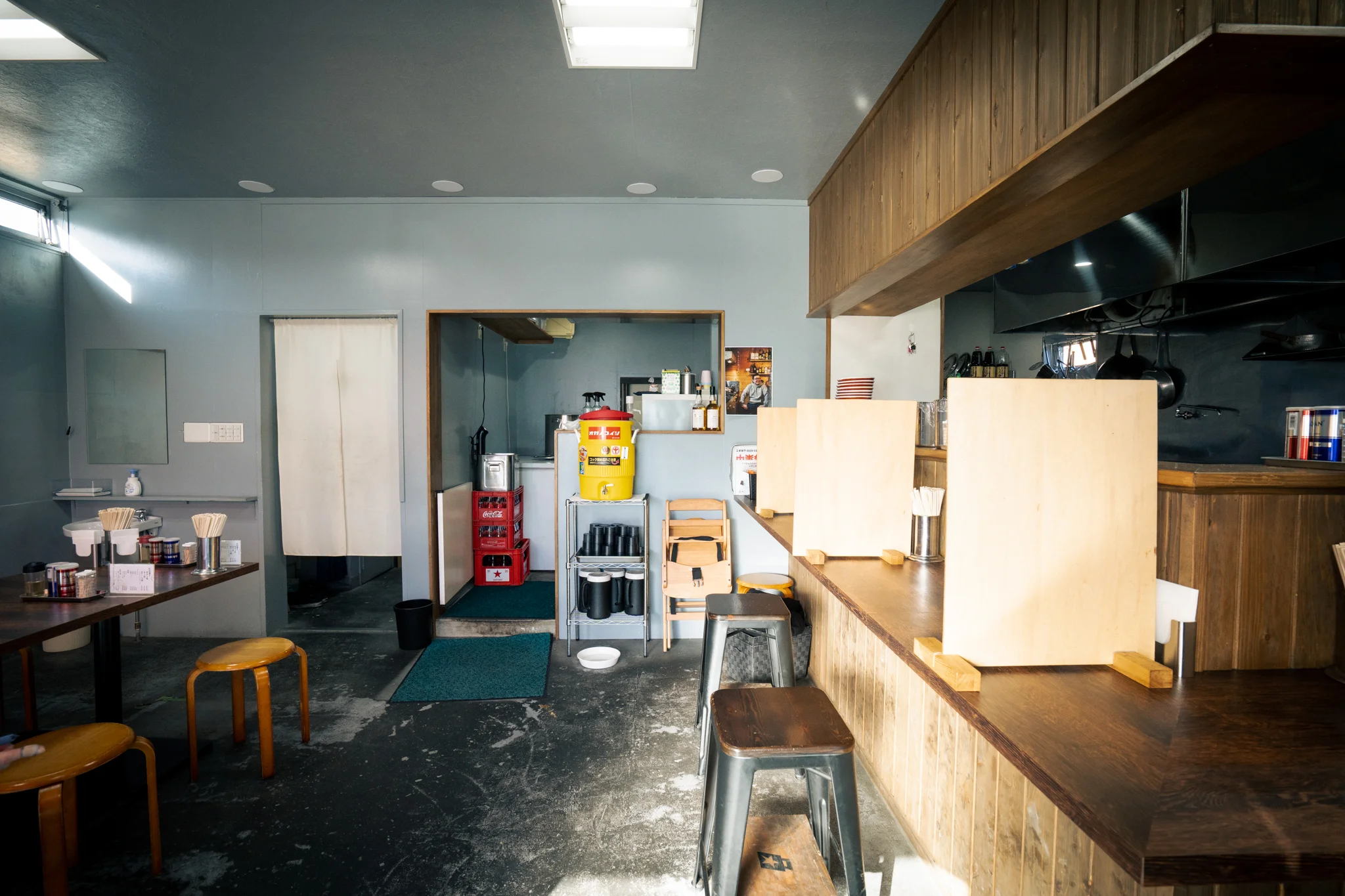
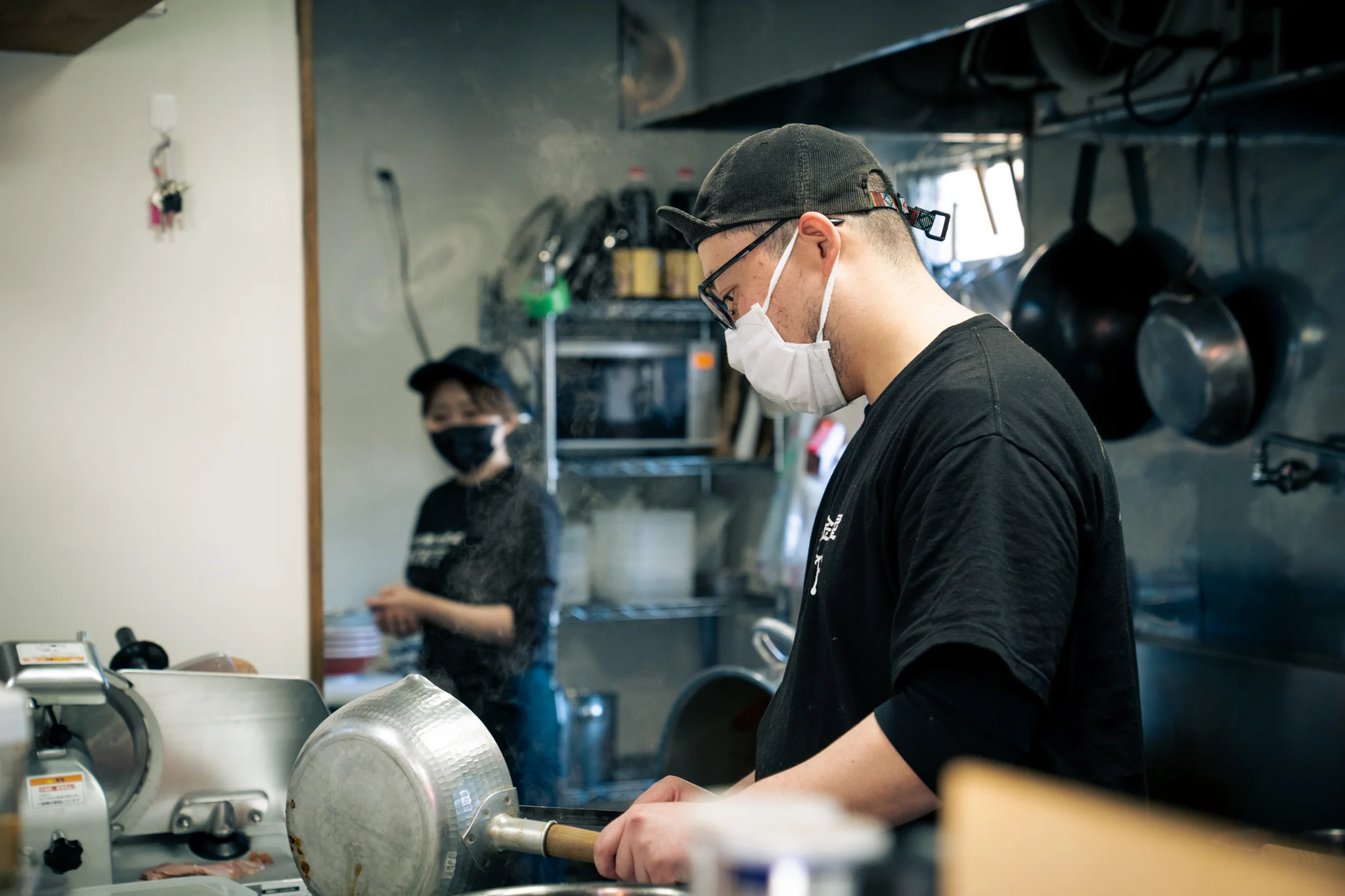
YamamotoThat's right. The counter you see now didn't exist at first -- it was nothing but empty walls. So the initial investment was significant, and I had my doubts.
But because it was during COVID, I had time to think. In the end, I made my peace with it and decided, "I'm doing it here."
AsamiBy the way, the name "Daikinboshi" has an interesting origin too, doesn't it?
YamamotoThe "Dai" comes from Taishouken. The "Kin" comes from Golden Tiger -- the "gold."
But "Daikin" alone sounded weird (laughs). Plus, every shop I trained at was an incredible place, and I wanted to beat them. In sumo, "daikinboshi" means pulling off a major upset -- a lower-ranked wrestler defeating a yokozuna. That's why I named it Daikinboshi.
The incurable disease, the training, the detours — everything led to this shop. — Yoshitaka Yamamoto 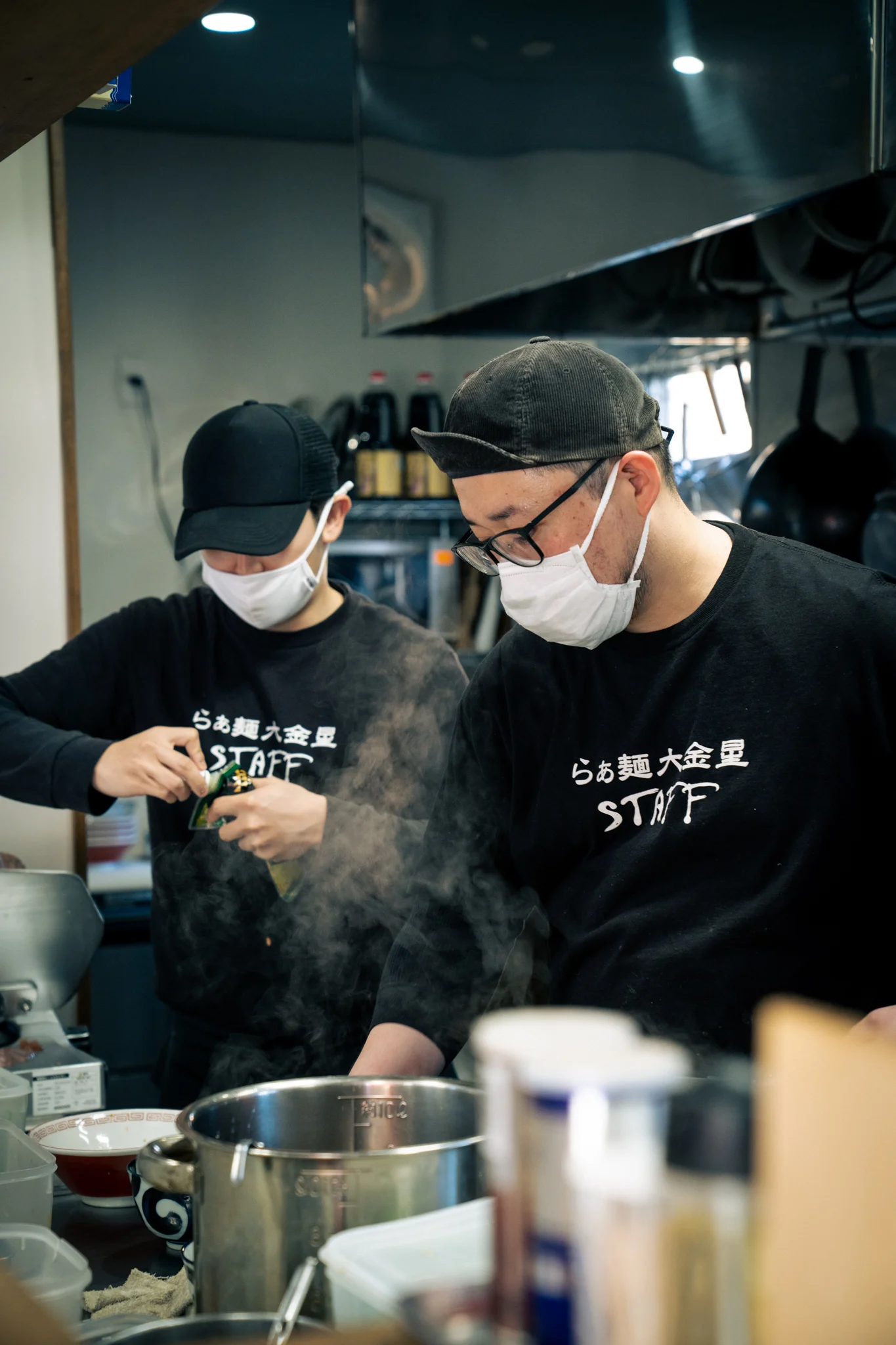
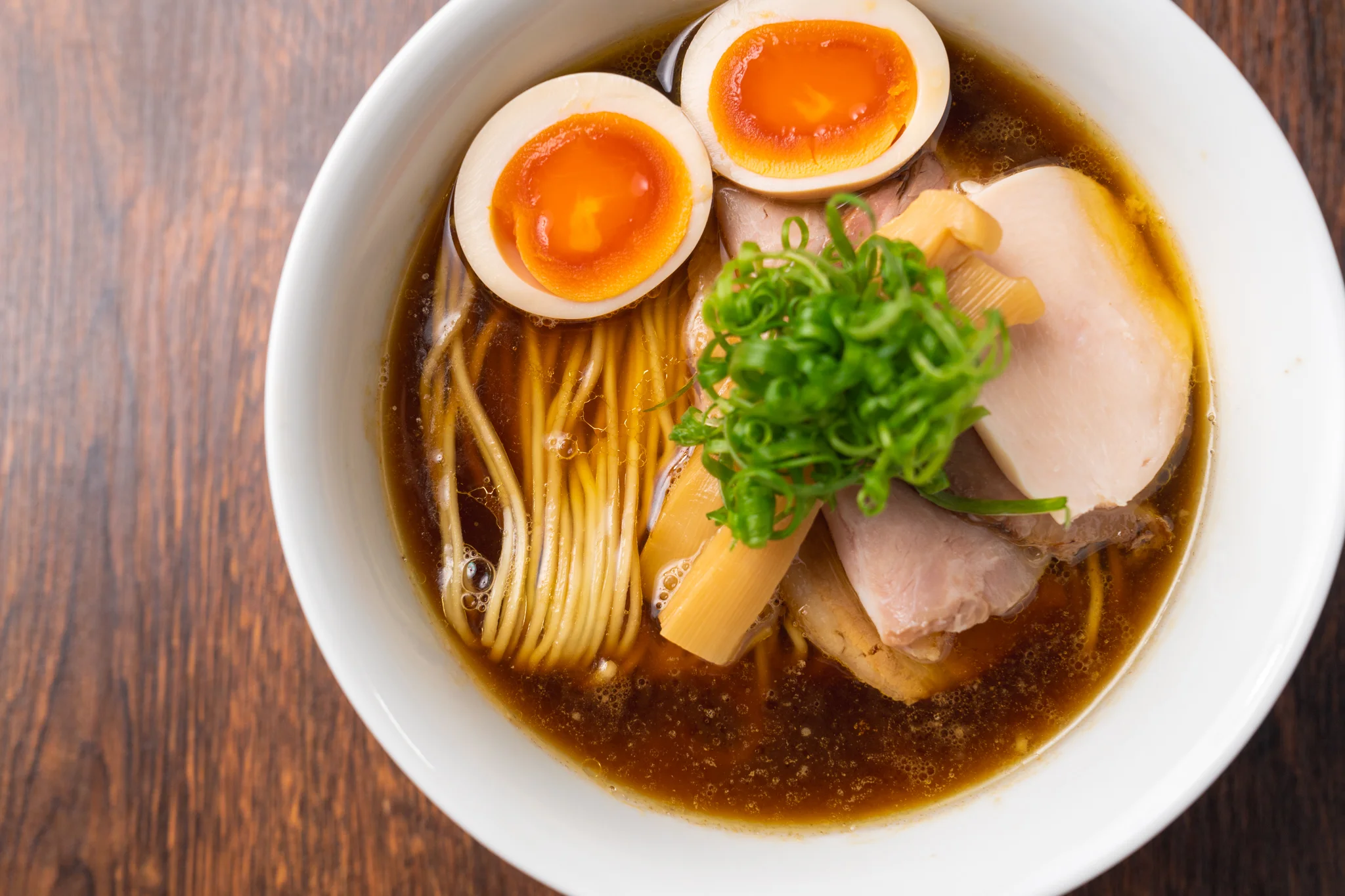
05 What's next for Daikinboshi
AsamiYou've trained at multiple shops, dealt with an incurable disease, and kept pushing through. All of that experience and wisdom has come together in Daikinboshi as it stands today.
YamamotoThat's right. I'm truly glad I was able to open this place.
AsamiTo wrap up, what do you want to do going forward with Ramen Daikinboshi, or in your life in general?
YamamotoFirst, I want to hire employees and expand to more locations. Not a huge number -- but I'd like one or two more shops.
Right now, I'm kind of maxed out on my own. Both in terms of growing the business and learning to manage people, I want to take things to the next level.
AsamiWhat kind of person are you looking for?
YamamotoSomeone I'd want to work with. But the one thing I've been told from the very beginning is that an honest, sincere person is best.
I wasn't always like that myself, so I feel it even more strongly. For better or worse, someone who can just say "yes" and "I understand." Right now, I think sincerity is the most important quality.
AsamiDo they need cooking experience?
YamamotoNot at all.
AsamiThere you have it. Sincere people, please apply (laughs).
YamamotoPlease do (laughs).
AsamiA second location, a third -- I'm looking forward to it.
YamamotoPersonally, I'd love to open a tsukemen specialty shop.
AsamiOh, a tsukemen specialty shop. Going all in.
YamamotoWho knows, I might call it "brothless tsukemen" and actually serve pasta (laughs). Vongole tsukemen, anyone?
AsamiBy the way, do you still like pasta?
YamamotoI do.
AsamiStill a pasta lover after all (laughs).
AsamiBut really, life throws a lot at you. I think experiencing the bad times is important too.
Someone who used to make excuses for everything has come this far, and now says, "What I need most is an honest person." I think that says something really significant.
YamamotoIt really does.
AsamiThe ramen's delicious, your story is fascinating, and you mentioned you want to strengthen the branding -- so I'd love for us to keep working together through Asami Seisakusho as well.
YamamotoAbsolutely. Thank you so much.
AsamiThat was Yamamoto-san from Ramen Daikinboshi. Thank you for your time today.
YamamotoThank you very much.